
Bonsai style guide
How to read a Literati bonsai direction
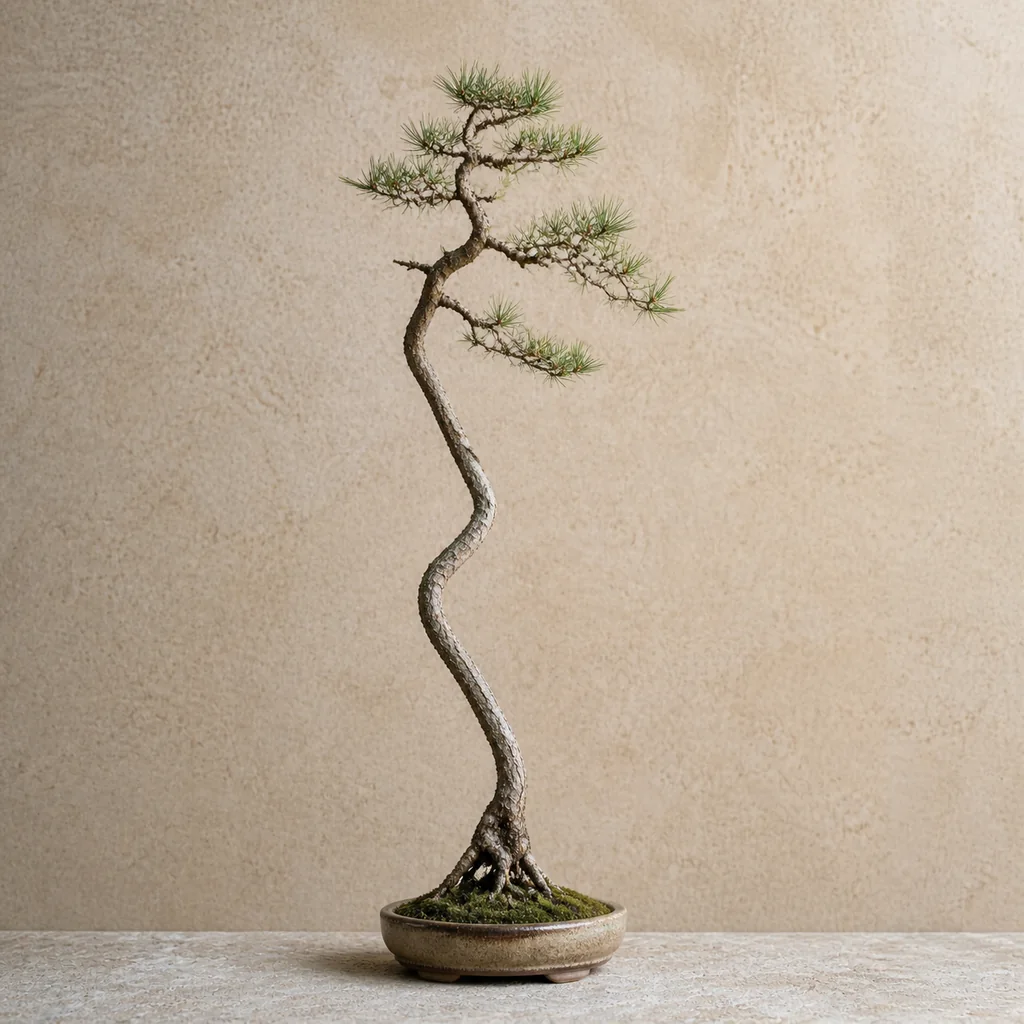
Literati reduces foliage and obvious stability to emphasize an expressive trunk line, restraint, asymmetry and carefully placed negative space. A useful style decision starts with the tree already in front of you, not with a finished silhouette copied from another specimen. This guide separates the visual idea from the structural evidence so you can decide whether Literati is a credible direction for your material.
What matters most
- The trunk must carry the composition because foliage is sparse. Every bend, empty interval and small branch mass needs a purpose, and taper should remain believable through the long line.
- It can suit slender, tall or unconventional material with a compelling line, limited but well-placed branches and character that would be lost inside a dense crown.
- Use a visual preview to compare directions, then consult an experienced practitioner before major cuts, carving or heavy wiring.
The visual grammar of Literati
Literati reduces foliage and obvious stability to emphasize an expressive trunk line, restraint, asymmetry and carefully placed negative space.
The important question is not whether a tree can be forced into the label. It is whether the existing trunk line, taper, branch origin and visual weight can support the direction without erasing the character that made the material interesting. The trunk must carry the composition because foliage is sparse. Every bend, empty interval and small branch mass needs a purpose, and taper should remain believable through the long line.
Material that supports the direction
It can suit slender, tall or unconventional material with a compelling line, limited but well-placed branches and character that would be lost inside a dense crown.
Read the photograph from the base upward. Mark the strongest movement, the point where taper changes, the branches that can establish depth, and any feature that must remain visible in the final design. A good Literati concept makes those existing facts clearer instead of replacing them with a generic tree.
- Compelling trunk line
- Purposeful asymmetry
- Few but useful branches
- Negative space with tension
Warning signs and nearby styles
Sparse foliage alone does not create Literati. A weak trunk line, random bends or empty space without tension can make the tree look unfinished rather than intentionally restrained.
Unlike Windswept, Literati does not need every branch to obey one environmental direction. Unlike Informal Upright, it accepts greater visual risk and much less foliage mass.
When two directions remain plausible, compare both against the same source photo. Keeping the source fixed makes it easier to see which concept respects the visible trunk and which one depends on invented structure.
Preview before committing to the work
Bonsivo lets you upload one clear front view, select Literati, and explore four structure-aware concepts at a 1, 3 or 5-year visual horizon. The result is a design conversation aid: use it to compare silhouettes, negative space and branch mass before deciding which direction deserves a real workshop plan.
A concept image cannot inspect health, hidden roots, branch flexibility or seasonal timing. Treat it as visual inspiration, keep the original photo beside it, and verify major horticultural decisions with someone who can examine the tree in person.
Questions people ask
Can any bonsai be made into Literati?
No. A convincing direction depends on the existing trunk line, taper, branch placement, health and workable structure. A preview can reveal visual possibilities but cannot make unsuitable material structurally appropriate.
Does a Bonsivo Literati concept tell me exactly where to cut?
No. It is a visual concept, not a pruning, wiring or horticultural prescription. Use it to compare ideas and consult an experienced practitioner before irreversible work.
Continue the decision
Bonsai styles and shapes
Bonsai styles should begin with the tree, not the label
Compare six classic bonsai styling directions, learn how trunk line, taper, branch placement and negative space affect the choice, and explore which direction fits the real tree you already have.
Read this guideBonsai style guide
How to read a Windswept bonsai direction
Learn how the Windswept bonsai style reads, which trunk and branch structures support it, what warning signs to notice, and how to preview the direction on your own tree before irreversible work.
Read this guideBonsai style guide
How to read a Informal Upright bonsai direction
Learn how the Informal Upright bonsai style reads, which trunk and branch structures support it, what warning signs to notice, and how to preview the direction on your own tree before irreversible work.
Read this guideSpecies styling guide
Choosing a styling direction for Juniper bonsai
Compare the Bonsivo-supported styling directions that can suit Juniper bonsai, learn what to read in the existing trunk and branch structure, and preview credible options on your own tree photo.
Read this guideUse the real source
See your tree in a Literati direction
Upload one front-facing photo and compare four concepts anchored to the trunk you already have.