
Source-to-concept evidence
Compare every future concept with its source structure
This gallery uses synthetic AI demonstration imagery to make the Bonsivo comparison method visible across all six supported styles. The pairs are not customer submissions or workshop results. Their value is narrower: each one lets you trace the same root base, trunk path and major branch origins before judging the proposed silhouette.
What matters most
- Six demonstrations cover every styling direction currently available in Bonsivo.
- Each comparison keeps source structure visible and explains what remains continuous.
- Every image is disclosed as AI-generated and never presented as a guaranteed outcome.
AI-generated demonstration
These are AI-generated demonstration images created to explain Bonsivo's comparison workflow. Each image is not a customer submission, documented workshop result or promise of how a living tree will grow.
Six supported directions
Read the same structure before and after the concept
Start at the base and trace the trunk across the center of each pair. Only after continuity is clear should foliage, negative space and presentation influence your judgment.
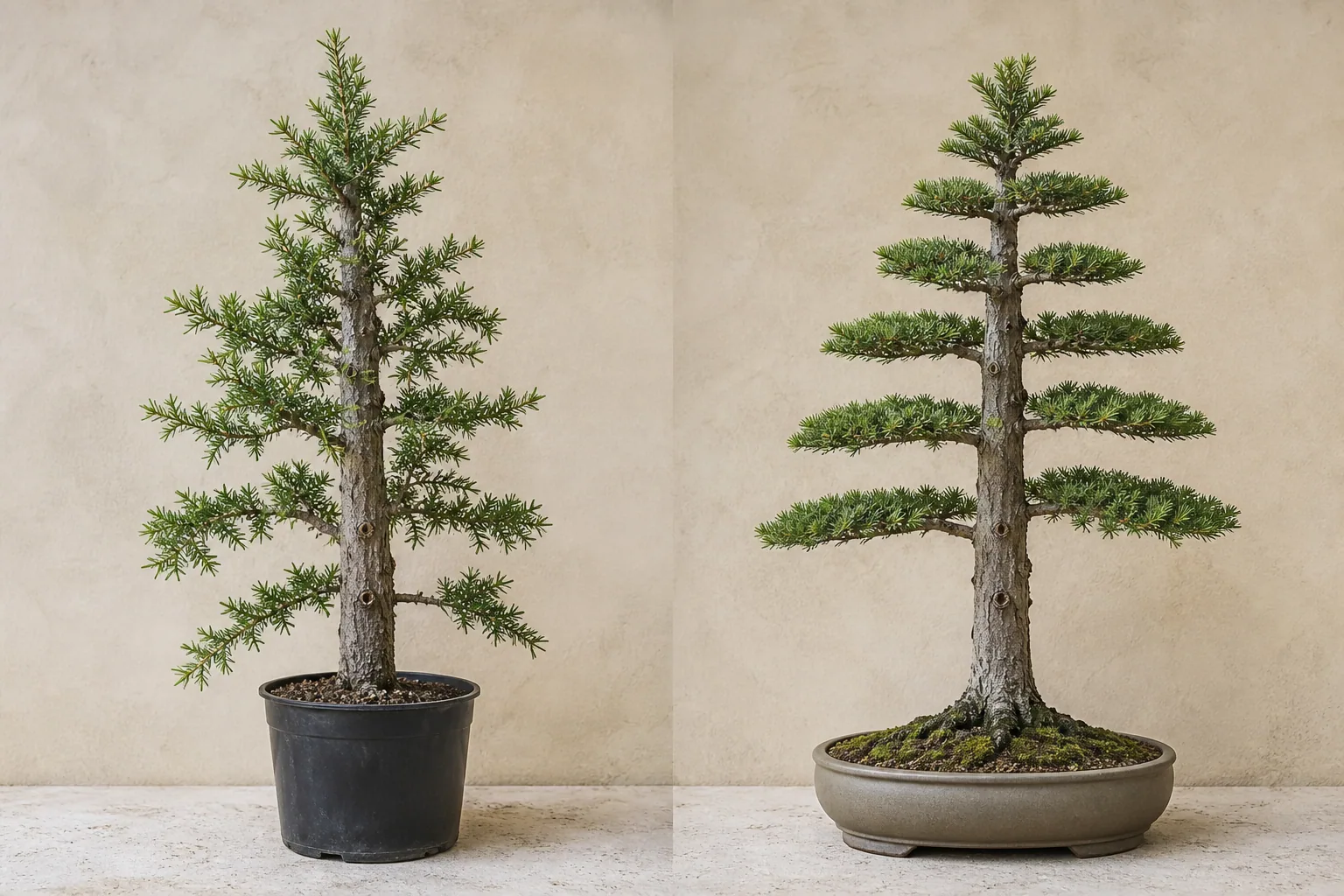
01 · Upright conifer-like demonstration material
Formal Upright from a stable vertical line
- Structure kept visible
- The concept keeps the visible root base, straight trunk axis, progressive taper and the original heights of the major branch origins.
- What this cannot establish
- The denser pads are a visual organization idea, not evidence that the branches are flexible, healthy or ready for this work.
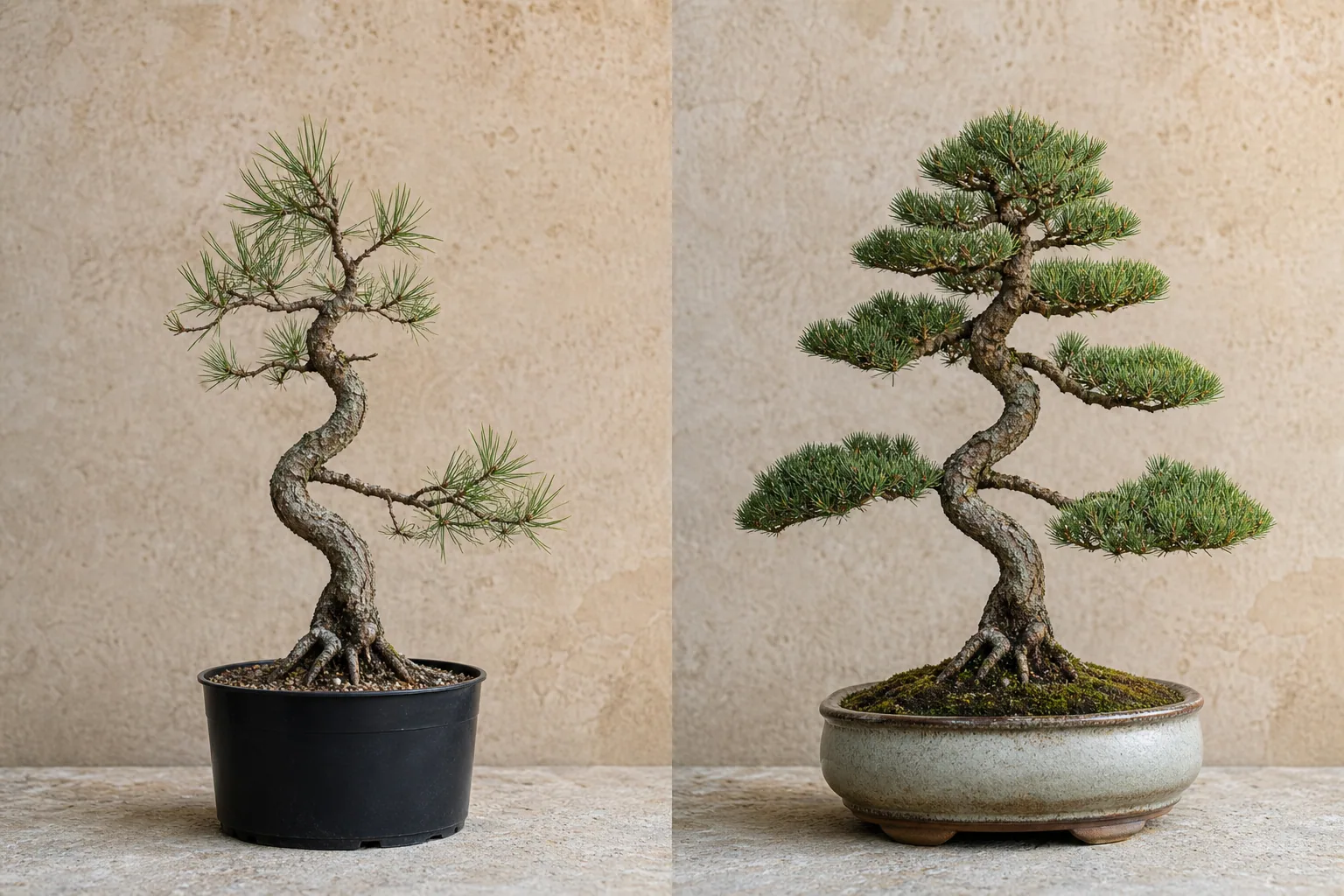
02 · Curved pine-like demonstration material
Informal Upright around the existing movement
- Structure kept visible
- The root flare, alternating trunk bends and the strongest left and right branch origins remain readable on both sides of the comparison.
- What this cannot establish
- The mature foliage density and ceramic container are presentation choices, not a pot recommendation or a forecast of five years of growth.
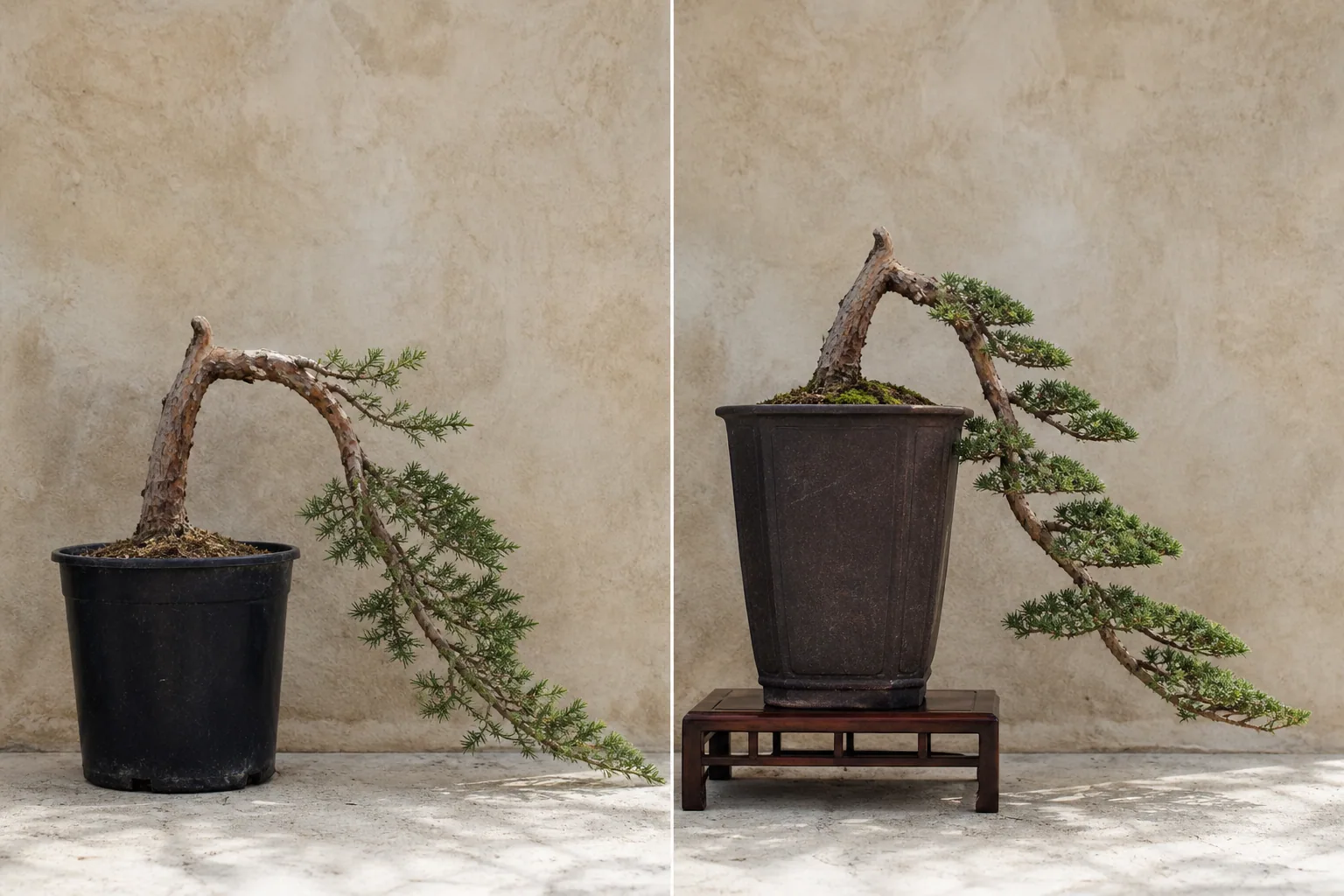
03 · Flexible conifer-like demonstration material
Cascade from a trunk that already descends
- Structure kept visible
- The low first movement, descending trunk path and key outside branches are retained while foliage is clarified around the existing fall.
- What this cannot establish
- A photograph cannot confirm whether the trunk can be lowered safely or whether the visible branches can survive the implied repositioning.
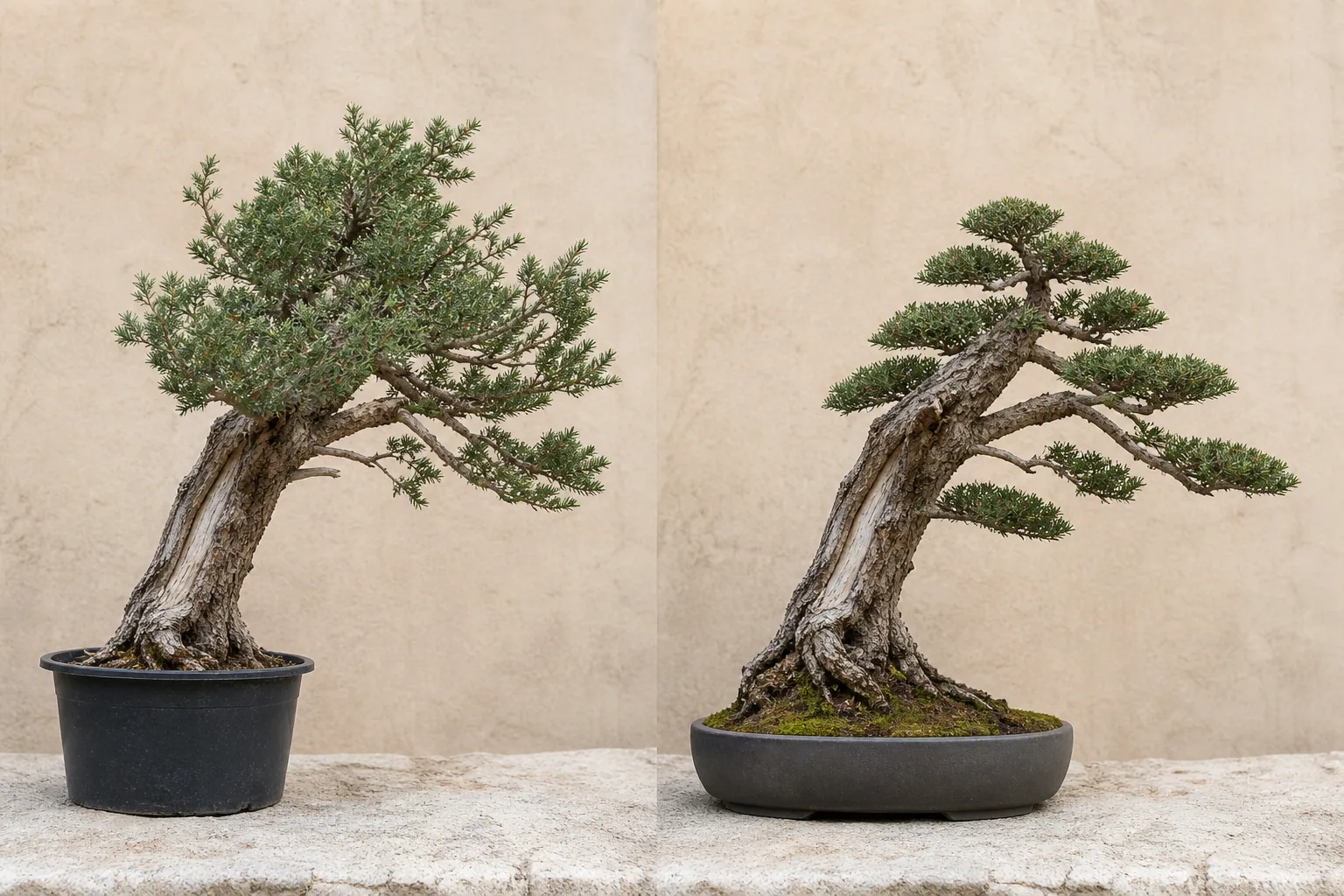
04 · Rugged conifer-like demonstration material
Windswept from consistent directional evidence
- Structure kept visible
- The leaning trunk, exposed inner curve and branches already travelling with the dominant direction remain the structural explanation for the design.
- What this cannot establish
- The image does not establish deadwood health, wind exposure history or whether opposing branches should actually be removed.
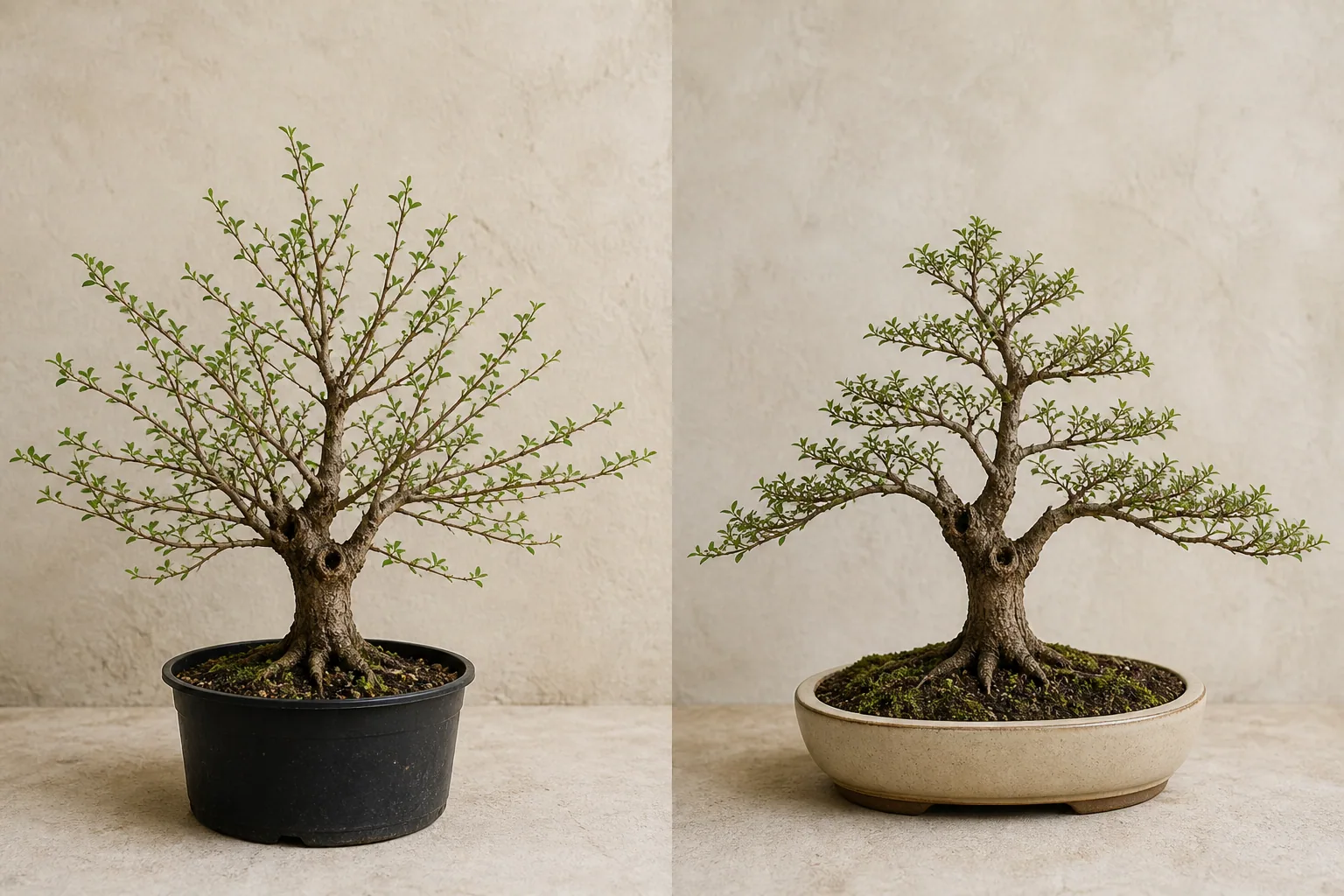
05 · Fine-branched deciduous demonstration material
Broom from radial branch structure
- Structure kept visible
- The short upright trunk, radial branch origins and broad crown center stay fixed while the concept makes the existing fan structure easier to read.
- What this cannot establish
- The fine ramification is illustrative. It does not promise seasonal density, branch survival or a specific development schedule.
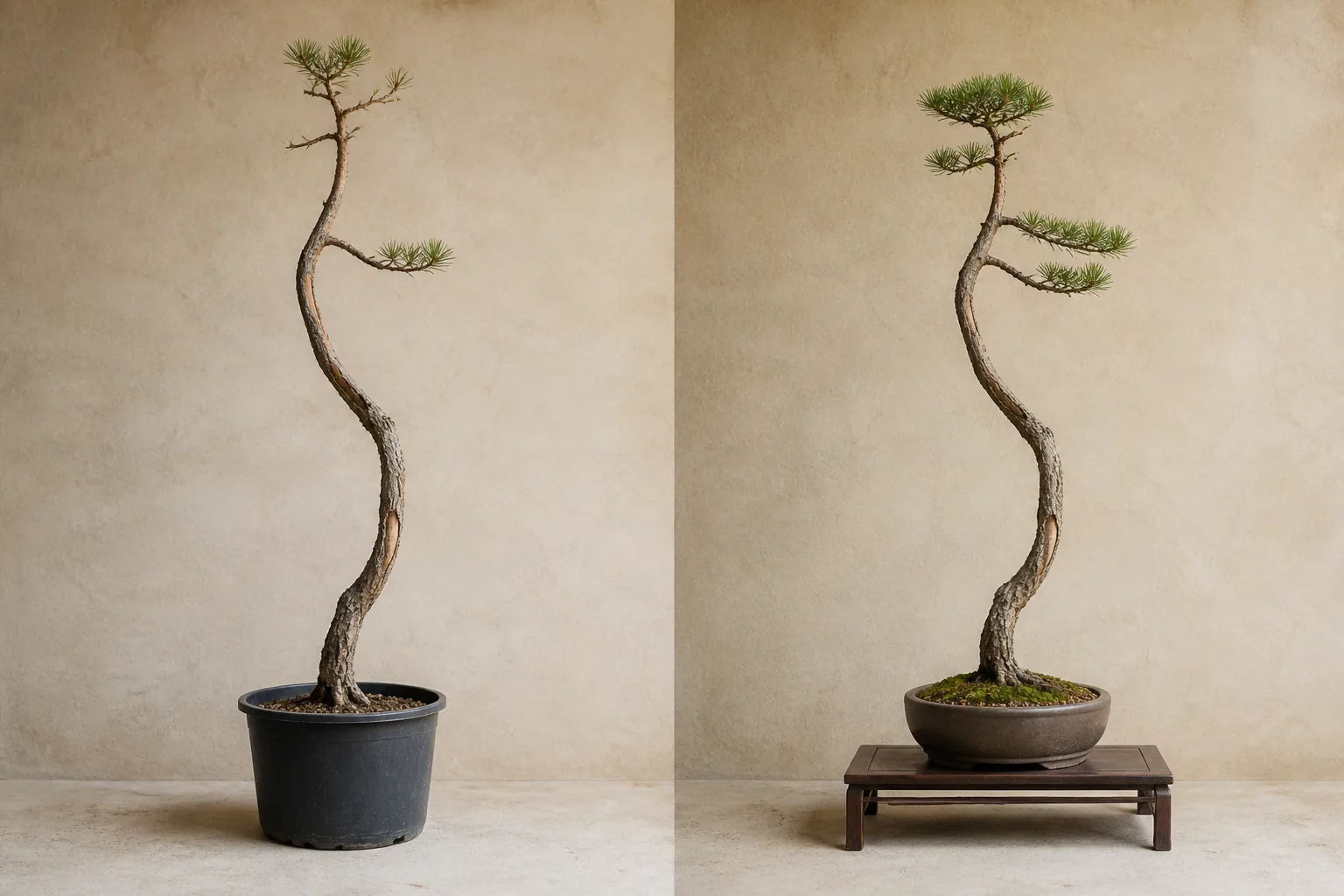
06 · Slender pine-like demonstration material
Literati by protecting line and restraint
- Structure kept visible
- The tall narrow trunk, asymmetric bends and limited high branch origins remain visible instead of being hidden behind a fuller generic crown.
- What this cannot establish
- Sparse foliage is a visual direction, not proof that the tree is vigorous enough for reduction or that every depicted bend is achievable.
What these demonstrations are for
Each pair illustrates one supported style, one visual horizon and one presentation choice. Both sides were created as synthetic demonstration material, so they can explain the product workflow without exposing private customer photographs or pretending to document physical bonsai work.
The useful test is structural continuity. The base, trunk and principal branch origins should remain traceable even when foliage density, negative space and presentation become more resolved.
How to inspect continuity
Trace the root base, dominant trunk path, major bends and primary branch origins from the source into the concept. Note where the design clarifies an existing line and where it introduces structure that cannot be verified.
Then compare taper, branch hierarchy, negative space and visual weight. A beautiful canopy does not compensate for losing the identity of the source tree.
How to compare examples fairly
Do not compare a one-year tree-only concept with a five-year show display and attribute every difference to styling quality. Horizon and presentation change perceived maturity, foliage mass and context.
Within each case, the synthetic source, selected style, horizon and presentation remain explicit. The gallery covers six different materials to demonstrate breadth; your own Bonsivo results should always be compared against the one photograph you actually uploaded.
What the gallery cannot prove
A concept cannot reveal hidden roots, health, live veins, branch flexibility, seasonal timing or the interventions required to approach a silhouette. It cannot establish that the living tree will grow at the depicted pace.
Use the gallery to evaluate visual reasoning and to prepare questions. Real pruning, wiring, carving and root work require direct assessment by someone who can examine the tree.
Questions people ask
Are these real customer trees or workshop results?
No. Every pair on this page is clearly labelled AI-generated demonstration imagery created to explain the comparison workflow without claiming customer provenance or a completed physical transformation.
Does an after image show what the tree will definitely become?
No. It is a visual styling concept. Actual growth and workshop results depend on the living tree, health, climate, technique and time.
Continue the decision
Bonsai styles and shapes
Bonsai styles should begin with the tree, not the label
Compare six classic bonsai styling directions, learn how trunk line, taper, branch placement and negative space affect the choice, and explore which direction fits the real tree you already have.
Read this guideDesign inspiration
Useful bonsai ideas solve a structural problem
Explore bonsai design ideas by structural problem—upright stability, trunk movement, downward flow, wind direction, radial crowns and expressive minimalism—then test the idea on your own source tree.
Read this guideMethod and limitations
A styling concept is useful only when its reasoning stays inspectable
Learn how Bonsivo treats the source photograph as a structural contract, varies four concepts within a selected style, evaluates continuity and discloses the limits of visual generation before real bonsai work.
Read this guideSource photo guide
A useful bonsai photo records evidence, not atmosphere
Prepare a clear bonsai source photo for styling visualization: choose a front, set camera height, reveal the base and primary branches, control background and light, and avoid angles that distort structure.
Read this guideUse the real source
Create a comparison from your own source tree
Upload one clear photo, keep it beside the results and judge four concepts against visible structure.